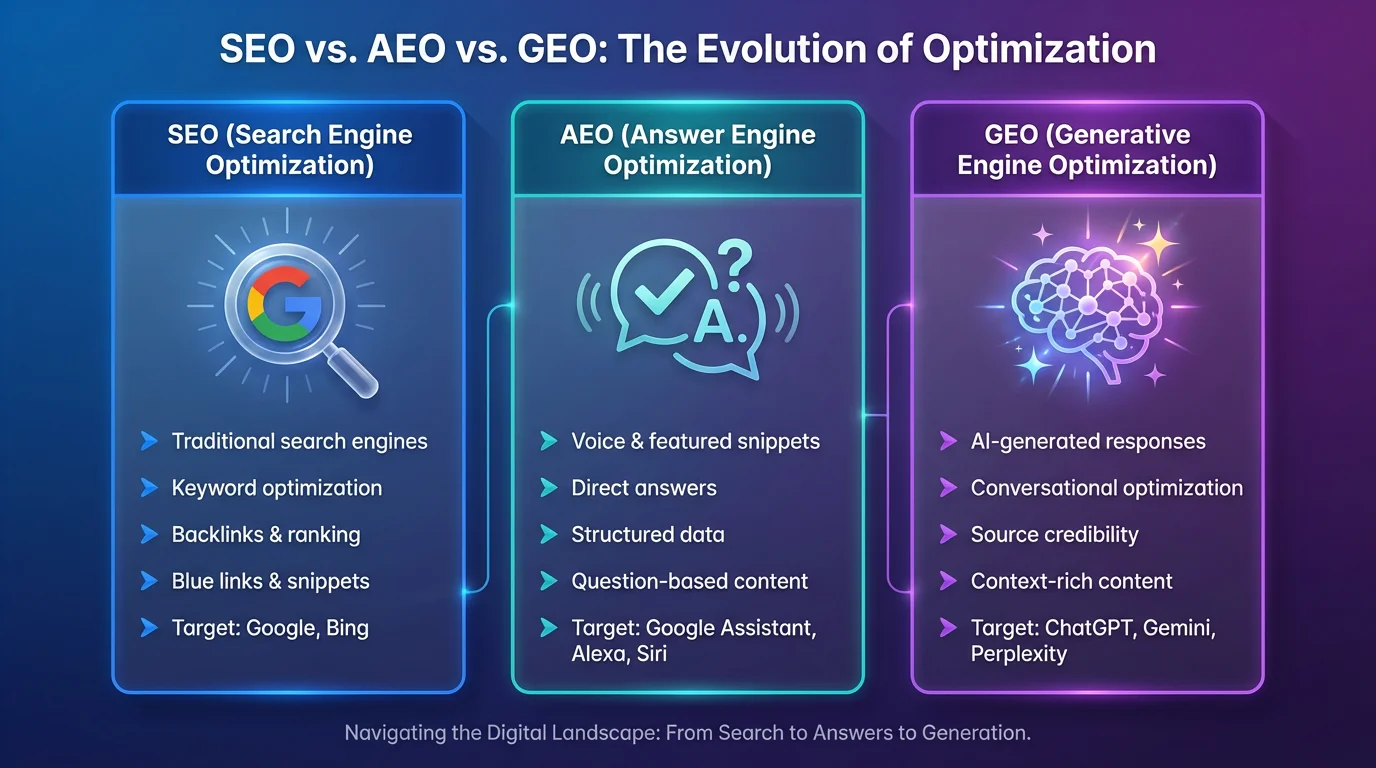
As AI transforms search, three distinct optimization approaches have emerged: GEO (Generative Engine Optimization), AEO (Answer Engine Optimization), and traditional SEO. Understanding the differences helps you build a comprehensive strategy that maximizes visibility across all search types. For deeper dives, see our guides on what is GEO, Answer Engine Optimization, and AI SEO vs Traditional SEO.
The Three Approaches Defined
1.Traditional SEO — Search Engine Optimization focuses on ranking in Google and other search engine results pages. It's the foundation of digital visibility, targeting keywords, building backlinks, and optimizing technical performance to appear in the familiar list of blue links.
2.AEO (Answer Engine Optimization) — AEO focuses on becoming the definitive source for direct answers. Answer engines like Google's featured snippets and voice assistants pull single, authoritative answers. AEO is about being that answer.
3.GEO (Generative Engine Optimization) — GEO targets AI-powered generative engines like ChatGPT and Perplexity. These systems synthesize information and cite sources. GEO ensures your content is cited in these AI-generated responses.
Key Differences at a Glance
Understanding the core differences helps you allocate resources effectively:
Traditional SEO Characteristics:
✓Goal: Rank high in search results pages
✓Metric: Position, organic traffic, CTR
✓Focus: Keywords, backlinks, technical SEO
✓Output: Link in search results
✓User action: Click through to website
AEO Characteristics:
✓Goal: Be the featured answer
✓Metric: Featured snippet wins, voice search presence
✓Focus: Direct answers, structured data, authority
✓Output: Single highlighted answer
✓User action: May or may not click through
GEO Characteristics:
✓Goal: Be cited by AI assistants
✓Metric: AI citations, referral traffic from AI platforms
✓Focus: Comprehensive content, expertise signals, extractability
✓Output: Citation within AI-generated answer
✓User action: Click citation or trust recommendation
Where Each Approach Excels
Different approaches work best for different scenarios:
Traditional SEO excels for:
✓E-commerce product discovery
✓Comparison shopping
✓Users who want to browse options
✓Building consistent organic traffic
✓Local search with map results
AEO excels for:
✓Quick factual queries (definitions, dates, facts)
✓Voice search optimization
✓Featured snippet capture
✓Zero-click search dominance
✓Brand authority positioning
GEO excels for:
✓Complex questions requiring synthesis
✓Research-phase queries
✓B2B decision-making
✓Professional services
✓Thought leadership visibility
Technical Requirements Compared
Each approach has distinct technical requirements:
Traditional SEO Technical Focus:
✓Page speed optimization
✓Mobile responsiveness
✓Crawlable architecture
✓Quality backlink building
✓Title tags and meta descriptions
AEO Technical Focus:
✓FAQ and HowTo schema markup
✓Clear question-answer formatting
✓Concise, direct answer placement
✓Structured data implementation
✓Voice search optimization
GEO Technical Focus:
✓Comprehensive schema markup
✓llms.txt implementation
✓Content structure for AI extraction
✓Author expertise signals
✓Brand consistency across web
Content Strategy Differences
Content approaches differ across the three disciplines:
"The key insight is that each approach requires content structured differently. Traditional SEO wants comprehensive pages. AEO wants clear, extractable answers. GEO wants authoritative, synthesizable content."
Traditional SEO Content:
✓Keyword-targeted pages
✓Comprehensive pillar content
✓Internal linking structures
✓Regular content updates
AEO Content:
✓Question-based headings
✓Direct answers in first paragraph
✓FAQ sections with clear answers
✓List and table formats
GEO Content:
✓Original research and data
✓Expert insights and quotes
✓Comprehensive topic coverage
✓Citations from authoritative sources
Building an Integrated Strategy
The most effective approach combines all three:
1.Start with SEO Foundation — Build solid technical SEO that supports all approaches: fast, mobile-friendly sites with clean architecture.
2.Layer in AEO Elements — Add structured data, FAQ sections, and direct answer formatting to capture featured snippets.
3.Enhance with GEO — Strengthen expertise signals, implement llms.txt, and create content that AI systems can extract and cite.
4.Measure Holistically — Track traditional rankings, featured snippet wins, and AI citations to understand full visibility.
Resource Allocation
How should you allocate resources across the three approaches?
For most businesses in 2026, a reasonable starting allocation might be:
✓50 to 60% on traditional SEO (still the traffic foundation)
✓20 to 25% on GEO (growing in importance)
✓15 to 25% on AEO (overlaps with both)
Adjust based on your audience's search behavior. B2B companies may weight GEO more heavily. Local businesses might focus more on traditional SEO. The key is monitoring where your traffic comes from and adapting.
Frequently Asked Questions
Q: Do I need to choose between GEO, AEO, and SEO?
A: No. The best strategy integrates all three approaches. They share foundational elements and complement each other for comprehensive visibility.
Q: Which is most important for B2B businesses?
A: B2B businesses often benefit most from GEO, as their audiences increasingly use AI assistants for research and decision-making. However, traditional SEO remains important for brand visibility.
Q: Can small businesses compete in all three areas?
A: Yes. Small businesses with genuine expertise can excel, especially in GEO, where AI systems value authoritative, niche content over generic corporate content.
Q: How do I measure success across all three?
A: Track organic rankings and traffic (SEO), featured snippet appearances (AEO), and AI platform referrals and citations (GEO). Each requires different monitoring approaches.
Q: Will one approach eventually replace the others?
A: Unlikely. Different user needs and search behaviors will continue to support all three. Users will search Google for some things and ask AI assistants for others.
The Bottom Line
GEO, AEO, and traditional SEO are complementary approaches to search visibility. Each serves different user needs and search behaviors. The businesses that succeed in 2026 and beyond will be those that master all three, building integrated strategies that ensure visibility wherever their audience searches.
If AEO is your priority, learn what a specialist AEO agency brings to the table and how professional AEO services accelerate your results.
Need help building an integrated search strategy? Explore Panovista Marketing's services for expert guidance on combining GEO, AEO, and SEO for maximum visibility.