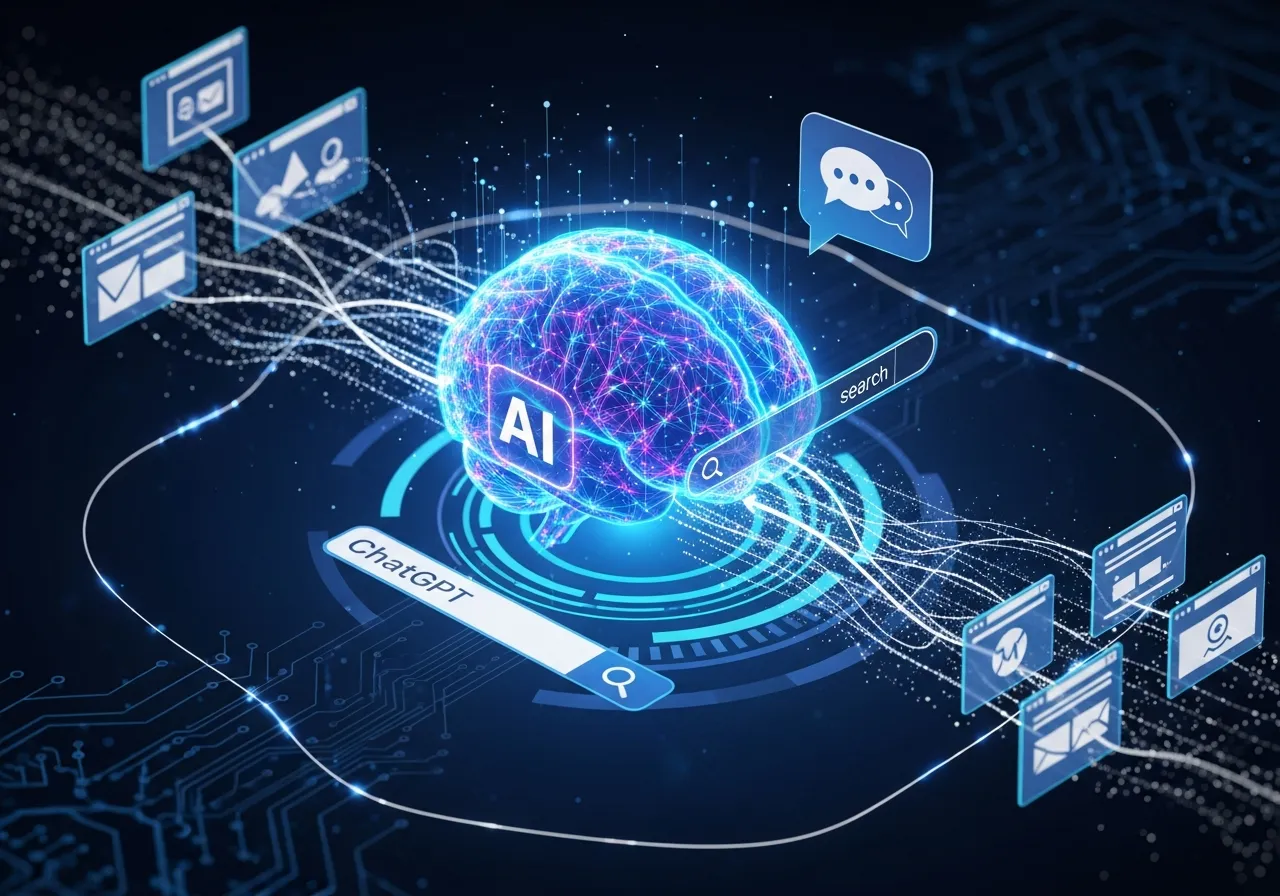
ChatGPT SEO in 2026: How to Rank, Thrive, and Lead in the Age of AI Search
💡 Tip:ChatGPT SEO is the art and science of optimizing your website and content so that AI-powered engines like ChatGPT, Gemini, and Perplexity surface, cite, and summarize your information in conversational answers. Unlike traditional SEO, which focuses on Google rankings, ChatGPT SEO prioritizes authority, clarity, and structure to win trust with AI. With ChatGPT now generating around 3.7% of Google's monthly search volume and AI-driven queries growing exponentially, brands that adapt now will lead tomorrow. See also our guides on [how to rank in ChatGPT](/blog/how-to-rank-in-chatgpt), [Perplexity SEO](/blog/perplexity-seo-guide), and [what is AI SEO](/blog/what-is-ai-seo).
What is ChatGPT SEO?
Since its debut in late 2022, ChatGPT has rapidly become a household name, reshaping how people find, consume, and interact with information. Within two months, ChatGPT became the fastest-growing app in history, reaching 100 million users. By 2026, it boasts 570 million monthly active users: now ranking #39 among global web domains, just behind Pinterest and ahead of giants like Reddit.
But what does this mean for SEO?
Traditional SEO has always been about optimizing for Google's algorithms: keywords, backlinks, technical health, and content quality. But ChatGPT SEO is different. It's about making your content discoverable, understandable, and authoritative in the eyes of AI-powered engines that generate direct, conversational answers.
Defining ChatGPT SEO
ChatGPT SEO is the process of optimizing your digital content, website structure, and brand signals to ensure that large language models (LLMs) like ChatGPT can easily find, trust, and cite your information when responding to user queries.
Key Differences from Traditional SEO
1.Conversational Focus — AI engines prefer content that answers questions directly, using natural language and clear structure.
2.Authority and Trust — E-E-A-T (Experience, Expertise, Authoritativeness, Trustworthiness) is even more critical, as AI models prioritize reputable sources.
3.Technical Accessibility — Structured data, schema markup, and mobile-friendly design are essential for AI parsing. Our [Infrastructure Recovery Case File](/blog/case-file-infrastructure-recovery) demonstrates how technical foundations directly impact AI trust.
4.Omnichannel Visibility — Ranking in ChatGPT often correlates with Bing and Google, but unique AI signals (like brand mentions and citations) are rising in importance.
Why ChatGPT SEO Matters in 2026
✓ChatGPT now generates 3.7% of Google's monthly search volume: hundreds of millions of queries per day
✓86% of SEO professionals have integrated AI into their strategy, with 65% seeing improved results
✓AI-driven search is expected to account for 30% of all browsing sessions by 2026
✓73% of ChatGPT's cited results overlap with Bing's top results, highlighting the importance of omnichannel SEO
How to Rank in ChatGPT Search
Unlike Google, which relies heavily on backlinks and keyword density, ChatGPT's search and citation logic is based on:
✓Authority: Does your content demonstrate expertise and trustworthiness?
✓Relevance: Does it directly answer the user's query in a clear, concise way?
✓Structure: Is your content organized with headings, lists, and schema markup for easy parsing?
✓Technical Health: Is your site fast, mobile-friendly, and accessible?
✓Brand Mentions: Are you cited by reputable sources across the web?
Recent Research Insights
✓Authority is the cornerstone: Content that demonstrates E-E-A-T is prioritized by ChatGPT and other AI engines
✓Conversational queries win: Content that mirrors how users ask questions in natural language is more likely to be cited
✓Technical excellence is non-negotiable: Fast, mobile-friendly, and well-structured sites are favored by AI algorithms
✓Schema markup boosts visibility: Pages with FAQ, How-To, and Article schemas are more likely to be referenced by ChatGPT
✓Brand mentions matter: There is a 73% overlap between Bing's top results and ChatGPT citations: so omnichannel authority is key
1. Build Authority Through Content
✓Showcase E-E-A-T: Publish well-researched, expert-driven content with clear author bios, citations, and references to reputable sources
✓Thought Leadership: Share original research, case studies, and expert opinions. Panovista Marketing's client campaigns emphasize thought leadership, earning citations from industry leaders and AI platforms alike
✓Consistency Across Channels: Align your website, social profiles, and content to reinforce your expertise and credibility
2. Optimize for Conversational Queries
✓Natural Language: Write content that answers questions the way people ask them. Use question-based headings and concise, direct answers
✓Long-Tail Keywords: Target hyper-focused, intent-driven queries that users are likely to ask in chat interfaces
✓Engaging Storytelling: Make your content relatable and easy to read: AI and humans both prefer it
💡 Tip:Instead of 'Best CRM software,' use 'What is the best CRM software for small businesses in 2026?' and answer it directly in your content.
3. Structure Content for AI Parsing
✓Headings and Bullet Points: Organize content with H2/H3 headings, lists, and short paragraphs for easy skimming
✓Schema Markup: Implement FAQ, How-To, and Article schema to signal structure to AI engines
✓Concise Summaries: Start sections with clear, direct answers: ChatGPT often pulls the first few sentences as its citation
4. Technical Excellence
✓Site Speed: Fast-loading sites are favored by both users and AI
✓Mobile-Friendliness: With 60%+ of searches now on mobile, responsive design is a must
✓Accessibility: Use alt text, clear navigation, and accessible design to ensure everyone (and every bot) can use your site
Sites with optimized technical health see up to 43% more AI-driven referrals and citations.
5. Build Brand Mentions and Omnichannel Authority
✓Earn Citations: Get mentioned by reputable sites, industry publications, and in listicles
✓Engage in Industry Discussions: Participate in forums, podcasts, and social media to boost your brand's footprint
✓Monitor and Grow Your Presence: Use tools like Google Alerts, Ahrefs, or BrandMentions to track where your brand is cited
There is a 0.65 correlation between first-page Google rankings and ChatGPT brand mentions. Top 3 Google results have the strongest effect.
6. Update Content Regularly
✓Content Freshness: AI engines favor recently updated content, especially for trends, products, and fast-changing topics
✓Add New Stats and Insights: Regularly refresh your pages with the latest data and expert opinions
Companies using generative AI to improve customer experience generate 25% more revenue in five years than those focused only on productivity.
Real-World Results: Client Testimonials
'Panovista Marketing helped us dominate local search and brought in more customers than we ever thought possible. The monthly dashboard and calls make everything clear and actionable.' : Local Business Owner, UK
'The team at Panovista are always available, transparent, and genuinely invested in our success. We've seen a huge improvement in our Google rankings and customer engagement.' : Retail Client, UK
'Since working with Ian and the Panovista team, we've seen our content cited in AI answers and noticed a real uptick in high-quality leads. Their expertise in AI SEO is second to none.' : B2B SaaS Founder
Frequently Asked Questions
Q: How can I tell if my website is being cited by AI tools like ChatGPT or Perplexity?
A: Currently, there's no universal analytics dashboard for AI citations. However, you can monitor referral traffic spikes from AI-related domains, set up Google Alerts for your brand or URL, and manually test queries in AI tools to see if your content is referenced. Some SEO tools and browser plugins are starting to offer AI citation tracking.
Q: What types of content are most likely to be picked up and cited by LLMs and generative engines?
A: Content that is comprehensive, well-structured, and authoritative tends to perform best. This includes FAQ pages, how-to guides, in-depth explainers, and content that includes original data, statistics, or expert quotes. Solution-focused and niche-specific content often outperforms generic articles.
Q: Should I change my entire SEO strategy to focus only on LLM SEO and ChatGPT SEO?
A: No: think of ChatGPT SEO as an expansion, not a replacement, of your current strategy. Continue optimizing for traditional search engines while also structuring your content for AI discoverability. The most successful brands will blend both approaches for maximum reach.
Q: How often should I update my content to stay relevant for AI-powered search?
A: Regular updates are increasingly important. AI models favor up-to-date, accurate information. Review and refresh your key content at least quarterly, adding new statistics, recent citations, and addressing emerging questions in your field.
Q: What are some quick wins I can implement today to boost my AI visibility?
A: Add authoritative citations and recent statistics to your most important pages. Use clear headings and FAQ sections: featured snippets are 77% more likely to include bulleted or numbered lists. Incorporate expert quotes or testimonials. Monitor which of your pages are already being referenced and double down on those topics. Ensure your site is technically sound: fast, mobile-friendly, and well-structured.
Q: How should a small business approach local SEO in the age of AI-powered and LLM search?
A: Local SEO is more important than ever as AI-powered engines increasingly deliver location-specific answers. Keep your Google Business Profile and local listings accurate and up to date. Make sure your website features clear NAP (Name, Address, Phone) details, locally relevant schema markup, and customer reviews. Create content that answers common local questions and highlights your unique offerings: AI engines love pulling from well-structured, locally relevant pages.
ChatGPT SEO Final Thoughts
The rise of AI-powered search means the rules of SEO are changing: fast. ChatGPT SEO is about more than keywords and backlinks; it's about building real authority, structuring your content for both humans and AI, and staying ahead of emerging trends. Brands that adapt now will be tomorrow's leaders.
For a step-by-step approach, read our guide on how to get cited by ChatGPT. Also explore how Claude SEO strategies complement your ChatGPT optimisation.
SEO is no longer just about Google. The brands that thrive in the AI era will be those that earn trust, answer questions directly, and are cited by both people and machines. Start optimizing for ChatGPT today, and you'll be ready for whatever comes next. Contact Panovista Marketing for a free AI visibility audit.