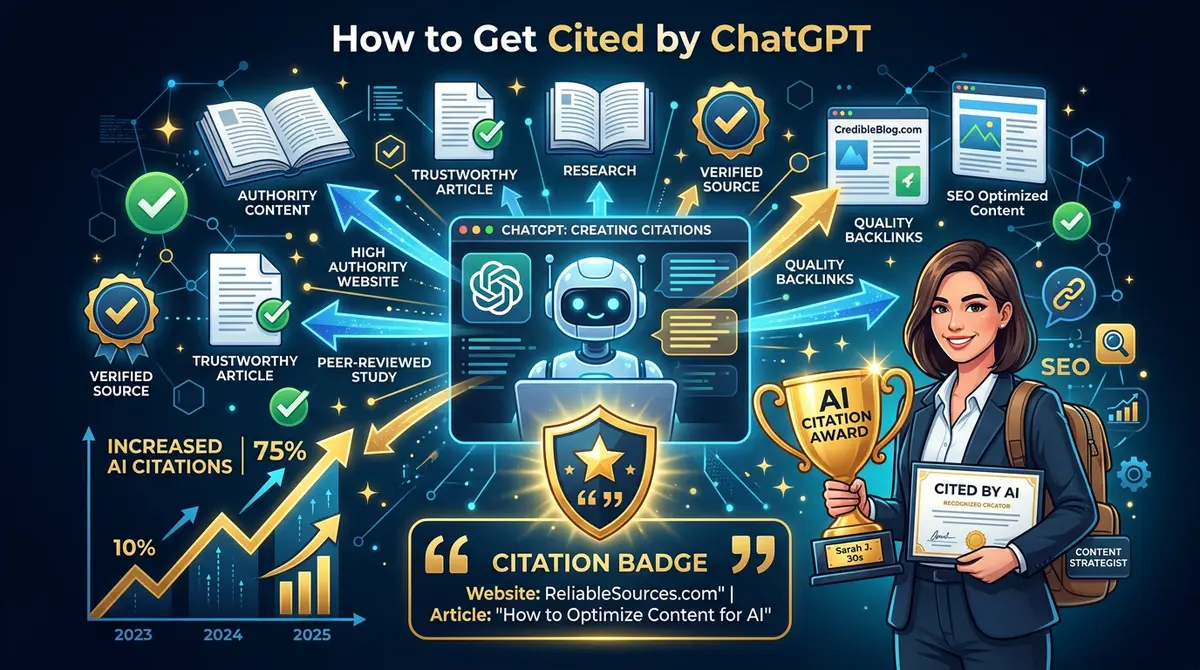
Getting cited by ChatGPT is quickly becoming one of the most sought-after outcomes in digital marketing. When ChatGPT recommends your business, it carries an implicit endorsement that traditional search results cannot match. At Panovista Marketing, our forensic methodology for ranking in ChatGPT has been refined through hundreds of successful client engagements.
The Five Pillars of ChatGPT Citation
Through forensic analysis of thousands of ChatGPT responses, we have identified five pillars that determine whether a business gets cited. Understanding and optimising each pillar is essential for consistent ChatGPT citations.
Pillar 1: Entity Recognition. — ChatGPT must recognise your business as a distinct entity before it can cite you. This requires comprehensive structured data, consistent business information, and verifiable credentials across the web.
Pillar 2: Content Extractability. — Your content must be structured so ChatGPT can easily extract key information, quotes, and recommendations. Dense, unstructured text is difficult for AI models to parse and cite.
Pillar 3: Structured Data Integrity. — Complete and accurate schema markup (Organisation, Service, FAQ, HowTo) provides ChatGPT with machine-readable information about your business. This is verified using [forensic data integrity methods](/blog/forensic-secret-primary-source-llms).
Pillar 4: AI Crawler Accessibility. — ChatGPT's web browsing capabilities rely on being able to access your content. Blocked AI crawlers mean zero chance of citation. Deploying [llms.txt](/blog/understanding-llms-txt) actively guides AI to your best content.
Pillar 5: Authority Signal Verification. — ChatGPT cross-references your claims against multiple sources. Being mentioned in industry publications, authoritative directories, and reputable third-party sources increases citation likelihood.
Forensic Methodology for ChatGPT Citations
Our approach is developed by Ian Ayliffe (First-Class Honours in Computer Forensics & Security from Leeds Beckett, Guest Lecturer at Imperial College London), applying digital forensics principles to AI search optimisation.
✓Conduct a baseline audit by querying ChatGPT about your business across 50+ relevant queries and documenting current citations.
✓Map your entity signals by auditing structured data, NAP consistency, and third-party mentions across the web.
✓Restructure key pages for AI extractability with clear headers, concise paragraphs, and quotable statements.
✓Verify AI crawler access by checking robots.txt, server logs, and deploying a comprehensive llms.txt file.
✓Build authority signals through industry publications, speaking engagements, and partnerships that AI models can verify.
Content Strategies That Earn ChatGPT Citations
Not all content is equally likely to be cited by ChatGPT. Our forensic analysis reveals specific content patterns that earn citations consistently:
Expert Guides. — Comprehensive, authoritative guides on specific topics are the most frequently cited content type. Our approach to [GEO implementation](/blog/how-to-implement-geo) demonstrates this principle.
Data-Driven Analysis. — Content that includes original data, statistics, and evidence-based analysis earns citations because it provides unique value that ChatGPT cannot generate independently.
How-To Content. — Step-by-step guides with clear, actionable instructions are highly citable because ChatGPT often needs to provide procedural answers to user queries.
Comparison Content. — Objective comparisons between solutions, approaches, or tools earn citations when users ask ChatGPT to help them make decisions, similar to our [GEO vs AEO vs SEO comparison](/blog/geo-vs-aeo-vs-seo).
Common Mistakes That Prevent ChatGPT Citations
Blocking AI Crawlers. — The single most common mistake. If GPTBot cannot access your site, ChatGPT cannot cite your content in real-time browsing responses.
Thin Content. — Pages with minimal content do not provide enough substance for ChatGPT to cite. Authoritative, in-depth content consistently outperforms thin pages.
Inconsistent Entity Information. — If your business name, address, or service descriptions vary across the web, ChatGPT may avoid citing you to prevent providing inaccurate information.
Missing Structured Data. — Without schema markup, ChatGPT must rely on unstructured text to understand your business. This increases the risk of misrepresentation or omission.
💡 Tip:Create a 'ChatGPT Citation Scorecard' for your business. Track how often you are cited, the accuracy of citations, and which queries trigger mentions. This data-driven approach allows you to measure the impact of your optimisation efforts objectively.
Frequently Asked Questions
Q: How do I check if ChatGPT is citing my business?
A: Systematically query ChatGPT with questions your target audience would ask. Record whether your business is mentioned, how it is described, and note any inaccuracies. Repeat this process weekly to track progress.
Q: Does paid advertising help with ChatGPT citations?
A: No. ChatGPT citations are based on organic authority, content quality, and technical signals. Paid advertising does not directly influence whether ChatGPT mentions your business.
Q: How is getting cited by ChatGPT different from ranking on Google?
A: Google ranking is based on links, content relevance, and technical SEO. ChatGPT citations depend on entity authority, content extractability, and trust signals. Both are important, and understanding [AI SEO vs traditional SEO](/blog/ai-seo-vs-traditional-seo) helps you invest in both.
Q: Can small businesses get cited by ChatGPT?
A: Yes. Small businesses with strong local entity signals, comprehensive structured data, and authoritative content in their niche can earn ChatGPT citations. Our [AI SEO strategies](/blog/best-ai-seo-strategies-2026) include specific tactics for smaller businesses.
Ready to get your business cited by ChatGPT? Contact Panovista Marketing for a forensic AI citation audit and a tailored strategy to earn consistent mentions in AI search.